Bunions (Hallux Valgus)
Hallux valgus, commonly known as a bunion, is a deviation of the big toe. Discover available orthopedic treatments.
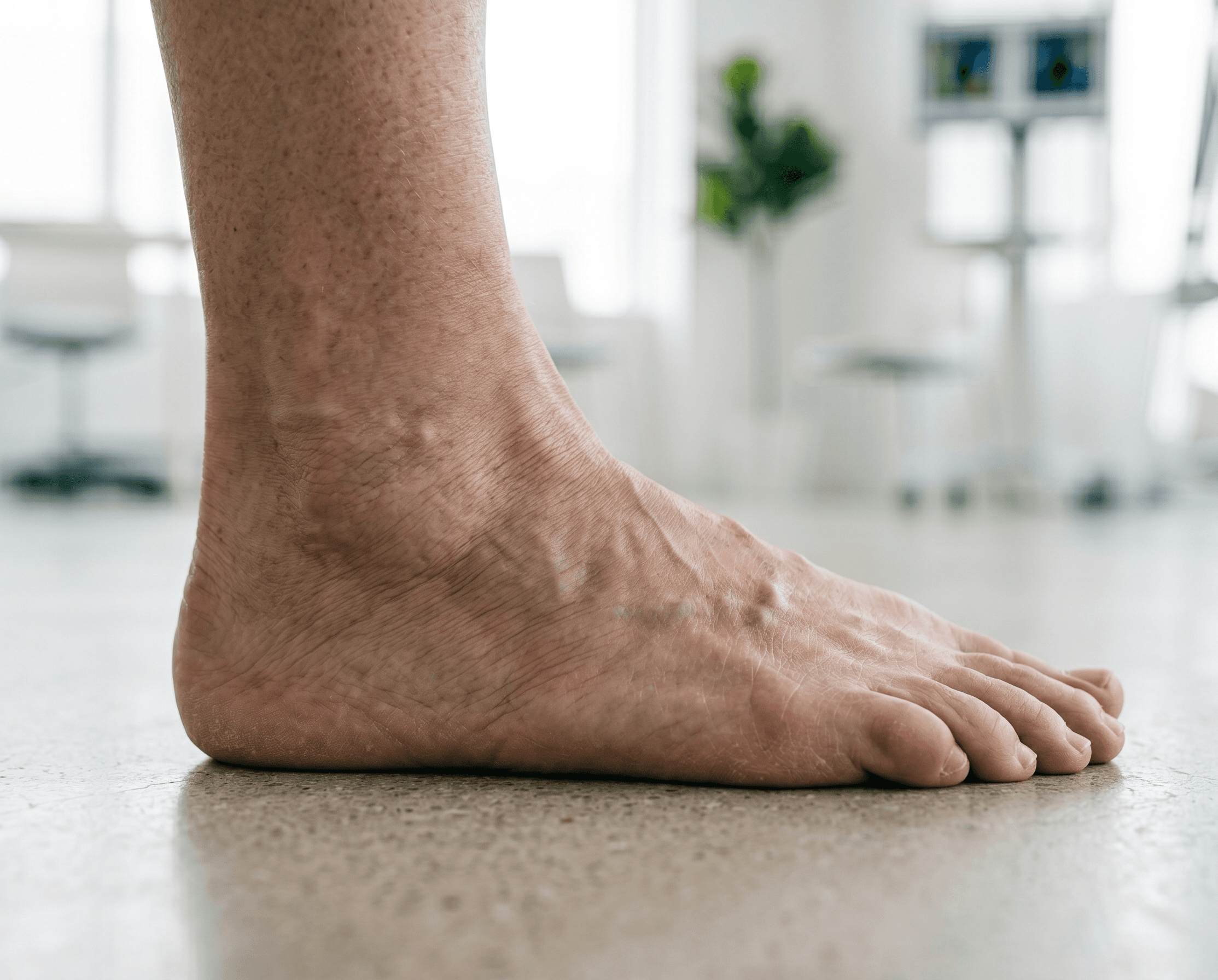
What is hallux valgus?
Hallux valgus is a joint deformity of the foot characterised by a deviation of the big toe (hallux) toward the neighbouring toes, accompanied by a bony bump on the inner edge of the foot at the metatarsophalangeal joint. This prominence, commonly called a "bunion", is actually the head of the first metatarsal that becomes apparent under the skin due to joint misalignment.
This condition is progressive: without intervention, the deformity slowly worsens over the years. The big toe can eventually overlap or pass under the second toe, causing secondary deformities such as hammer or claw toe. Hallux valgus affects approximately 23% of the adult population and up to 35% of people over 65.
Beyond the cosmetic aspect, hallux valgus can become a major source of pain and functional limitation. The inflamed joint makes wearing shoes difficult, walking painful and balance unstable, especially in older people.
Causes of hallux valgus
Hallux valgus results from a combination of genetic and environmental factors:
- Genetic predisposition: foot shape, ligamentous laxity and bone structure run in families. This is the most important risk factor.
- Flat feet or excessive pronation: collapse of the plantar arch increases lateral pressure on the big toe and promotes deviation.
- Inappropriate shoes: narrow, pointed-toe shoes and high heels compress the toes and accelerate the progression of the deformity.
- Inflammatory diseases: rheumatoid arthritis and other joint diseases can weaken the joint and contribute to the deformity.
- Age and sex: the condition is much more common in women and worsens with age due to progressive loosening of ligaments and soft tissues.
Symptoms of hallux valgus
- Visible bump: bony prominence on the inner side of the foot at the base of the big toe.
- Joint pain: pain at the metatarsophalangeal joint, worsened by walking and wearing shoes.
- Redness and inflammation: the skin over the bump can become red, swollen and tender to the touch.
- Difficulty wearing shoes: standard shoes become uncomfortable or impossible to wear.
- Corns and calluses: friction of the big toe against the second toe causes skin lesions.
- Joint stiffness: progressive limitation of big-toe movement.
How a foot orthotic treats hallux valgus
Custom foot orthotics are an effective conservative treatment for hallux valgus. Although they cannot correct the existing bone deformity, they offer several important benefits:
- Slowing progression: by correcting foot biomechanics and reducing the forces that push the big toe outward, the orthotic slows the worsening of the deformity.
- Pain relief: pressure redistribution reduces the load on the affected joint and decreases inflammation.
- Improved stability: the orthotic improves overall foot alignment, which reduces postural compensations and protects other joints.
- Prevention of complications: by rebalancing forces on the forefoot, the orthotic helps prevent secondary deformities of neighbouring toes.
Treatment can be complemented by wearing wide-toe shoes, bunion protectors and, in some cases, night-time toe separators.
When to consult an orthotist?
It is recommended to consult an orthotist if:
- You notice a progressive deviation of the big toe
- The bump becomes painful or inflamed
- You have difficulty finding comfortable shoes
- Calluses or corns appear between the toes
- Pain limits your daily or sports activities
Our orthotists are members of the OTPQ and AOPQ. Early intervention significantly slows progression and avoids or delays surgery.
Treat your bunion without surgery
See a orthotist to assess your condition and discover how custom orthotics can help you.
Frequently asked questions about bunions
What is hallux valgus?
Hallux valgus, commonly known as a "bunion," is a deformity of the big toe which deviates toward the other toes, creating a bony bump on the inner side of the foot at the metatarsophalangeal joint.
Can foot orthotics correct hallux valgus?
Foot orthotics cannot reverse an existing bone deformity, but they can slow its progression, relieve pain and improve foot biomechanics. They are an effective alternative to surgery in mild to moderate stages.
Is hallux valgus hereditary?
Yes, genetic predisposition is an important factor. If a family member has a bunion, your risk is higher. However, other factors like ill-fitting footwear and foot biomechanics also contribute.
When should surgery be considered for hallux valgus?
Surgery is generally considered when pain is severe, when the deformity progresses despite conservative treatment, or when foot function is significantly impaired. Your orthotist can refer you to a specialist if necessary.
Do shoes cause hallux valgus?
Narrow shoes and high heels do not directly cause hallux valgus, but they can worsen the deformity in predisposed people. Wearing wide-toe, low-heel shoes helps prevent progression.
Does hallux valgus mainly affect women?
Yes, women are about 10 times more affected than men, partly due to genetic predisposition and frequent wearing of narrow or high-heeled shoes. However, men can also develop this condition.