Morton's Neuroma
Morton's neuroma causes sharp pain, burning and numbness between the toes. A custom foot orthotic can decompress the affected nerve and effectively relieve symptoms without surgery.
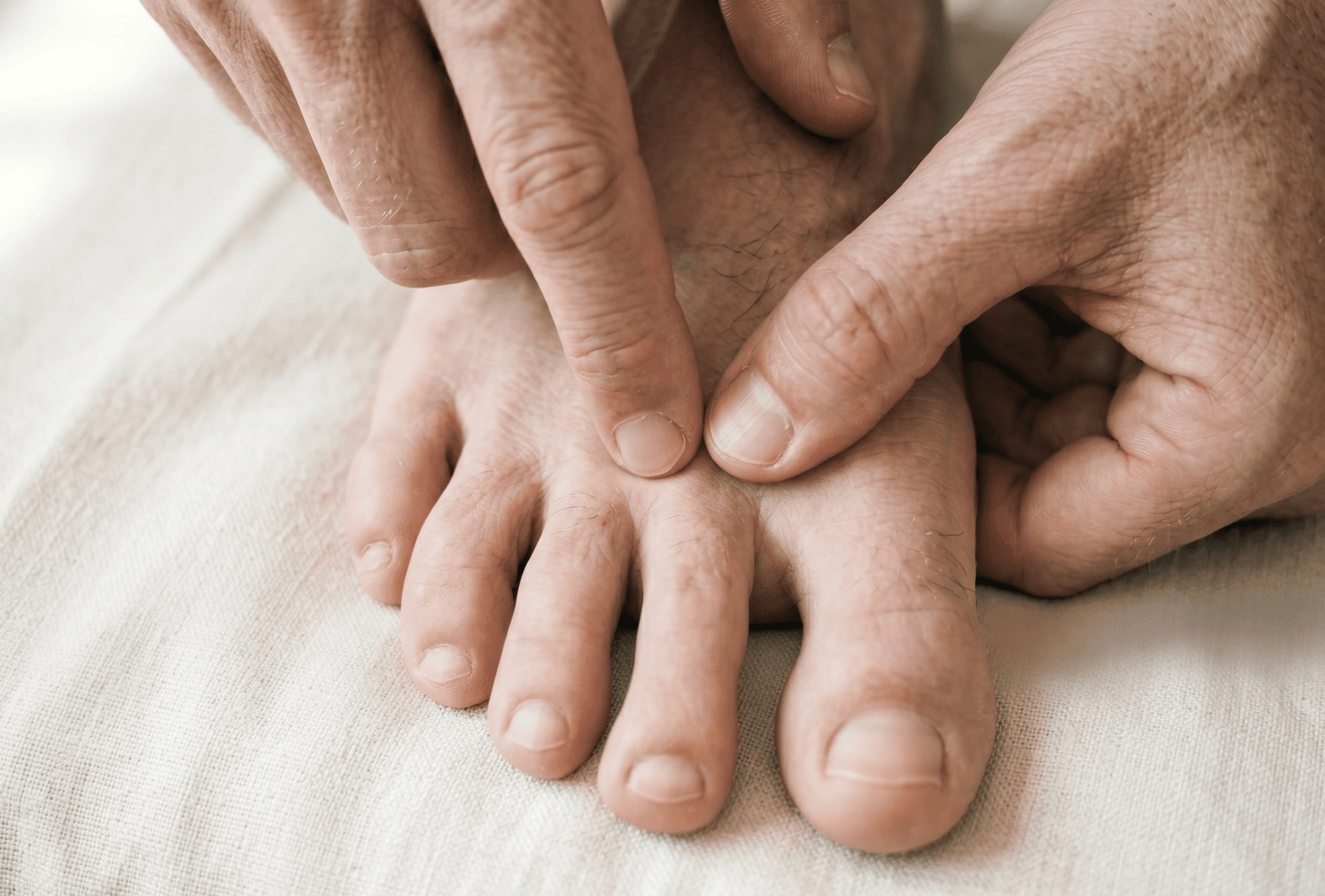
What is Morton's neuroma?
Morton's neuroma, also called Morton's metatarsalgia or interdigital neuroma, is a benign (non-cancerous) thickening of the tissue surrounding a plantar digital nerve, most often between the third and fourth metatarsals. It is not a true tumor, but rather perineural fibrosis: the nerve thickens in response to chronic mechanical irritation.
When the metatarsal heads repeatedly compress the interdigital nerve, it becomes irritated and gradually thickens. This process creates a fibrous nodule that further increases nerve compression, establishing a vicious cycle of pain and inflammation. The neuroma can reach 5 to 10 mm in diameter.
This condition mainly affects women between 30 and 60 years of age, likely because of frequent use of narrow shoes or high heels. The neuroma most often affects the third intermetatarsal space (between the third and fourth toes), although it can also develop in the second space. Neuromas in the first or fourth space are rare.
Causes of Morton's neuroma
- Narrow shoes: pointed-toe or overly tight shoes compress the metatarsals and the interdigital nerve.
- High heels: heels over 5 cm shift weight forward to the forefoot and increase compression on the interdigital nerves.
- Biomechanical abnormalities: flat feet, hallux valgus or forefoot instability alter foot mechanics and increase pressure on the intermetatarsal spaces.
- Sports activities: running, dancing, climbing and sports that compress the forefoot increase risk.
- Repeated trauma: micro-traumas to the forefoot gradually irritate the nerve.
Symptoms of Morton's neuroma
- Burning between the toes: intense burning sensation in the intermetatarsal space, radiating to the adjacent toes.
- Numbness: loss of sensation or tingling in the affected toes, as if the foot were falling asleep.
- Foreign body sensation: feeling of having a pebble, marble or fold of sock under the forefoot.
- Pain when walking: pain intensifies when walking, especially with tight shoes, and decreases when removing the shoe and massaging the foot.
- Electric shocks: sudden electric shock sensations in the toes.
- Relief when barefoot: symptoms generally decrease when the patient removes their shoes and massages the forefoot.
Treatment of Morton's neuroma with foot orthotics
Custom foot orthotics are a first-line conservative treatment for Morton's neuroma:
- Retrocapital support: a raised feature placed behind the metatarsal heads spreads the metatarsals apart and frees the space around the compressed nerve.
- Pressure redistribution: the orthotic evenly distributes weight under the forefoot, reducing compression on the nerve.
- Targeted discharge zone: a recess can be created directly under the neuroma to eliminate any pressure on the painful area.
- Biomechanical correction: the orthotic corrects foot posture abnormalities that contribute to nerve compression.
Treatment can be complemented by wide-toe shoe recommendations and, in more severe cases, by cortisone injections to reduce inflammation around the nerve.
When to consult an orthotist?
Consult an orthotist if:
- You feel burning or numbness between the toes
- You feel like you have a foreign body under the forefoot
- Forefoot pain worsens with closed shoes
- Tingling or electric shocks radiate to the toes
- Massaging the foot brings temporary relief but the pain returns
Our orthotists are members of the OTPQ and AOPQ. Early diagnosis allows more effective conservative treatment and reduces the risk of needing surgery.
Relieve your Morton's neuroma
Book an appointment with a orthotist for a comprehensive evaluation and custom orthotics.
Frequently asked questions about Morton's neuroma
What is Morton's neuroma?
Morton's neuroma is a benign thickening of the interdigital nerve, most often between the third and fourth toes. It causes sharp pain, a burning sensation and numbness in the affected area.
What are the typical symptoms of Morton's neuroma?
Symptoms include sharp or burning pain under the forefoot between the toes, numbness or tingling in the adjacent toes, and the sensation of having a pebble or a fold in your sock under the foot.
Can a foot orthotic treat Morton's neuroma?
Yes, custom foot orthotics are an effective conservative treatment. They include a retrocapital support that separates the metatarsal heads and reduces compression on the nerve, significantly relieving symptoms.
Does Morton's neuroma require surgery?
No, in most cases. Conservative treatment with foot orthotics, changing footwear and occasional cortisone injections is sufficient. Surgery is reserved for cases refractory to conservative treatment.
What shoes should I avoid with Morton's neuroma?
Avoid narrow, pointed-toe shoes and high heels which compress the forefoot and worsen pressure on the nerve. Favour wide-toe shoes with good support.
Can Morton's neuroma come back after treatment?
With continued use of foot orthotics and appropriate footwear, recurrence is rare. If aggravating factors (narrow shoes, high heels) are eliminated, the nerve can remain decongested long term.